The word “eco” gets attached to almost anything made from a fiber that sounds natural, and that is where the conversation usually goes wrong. A reusable bag is not automatically better for the planet the moment it leaves the factory. It becomes better when it replaces enough single-use bags to pay back the resources that went into making it. That threshold is lower than most people assume for non woven polypropylene, but it is not zero.
A UK life cycle assessment published by Eunomia in 2025 found that reusable grocery packaging can break even against single-use formats on climate impact within roughly ten to twenty-five uses, and in some formats in as few as two or three trips. A separate Canadian government review put the range for non woven PP bags at seven to eleven uses before the life cycle cost advantage tips in their favor. Those numbers are the real starting point for any honest conversation about the advantages of eco bags. The material gets a bag into the argument. The number of trips keeps it there.
For a company, the word “eco” is not the whole pitch. A branded reusable bag behaves like a small, portable billboard that the customer carries into a grocery store, a farmers market, a gym, and a back seat. Industry data on promotional totes suggests the average non woven bag generates close to two thousand impressions over its lifetime, and a meaningful share of users hold onto the bag for two years or longer. That longevity changes the cost math. A cheap single-use bag gets one impression at the register and then disappears. A better-built reusable bag keeps working after the transaction is forgotten.
There is a second commercial layer that rarely makes it into the sustainability deck. A bag that survives repeated trips reduces the replenishment cycle on the retail side. Fewer replacement orders, fewer checkout disruptions, and less inventory churn all show up on the operations ledger, not just the marketing budget. A campus-level financial analysis of reusable versus single-use bags found that reusable bags lowered annual costs in the first year of adoption, not after some distant payback period. The caveat is that the savings only materialize when the bags actually come back. If customers keep taking new bags at checkout, the retailer absorbs the higher upfront cost without reducing replenishment volume.
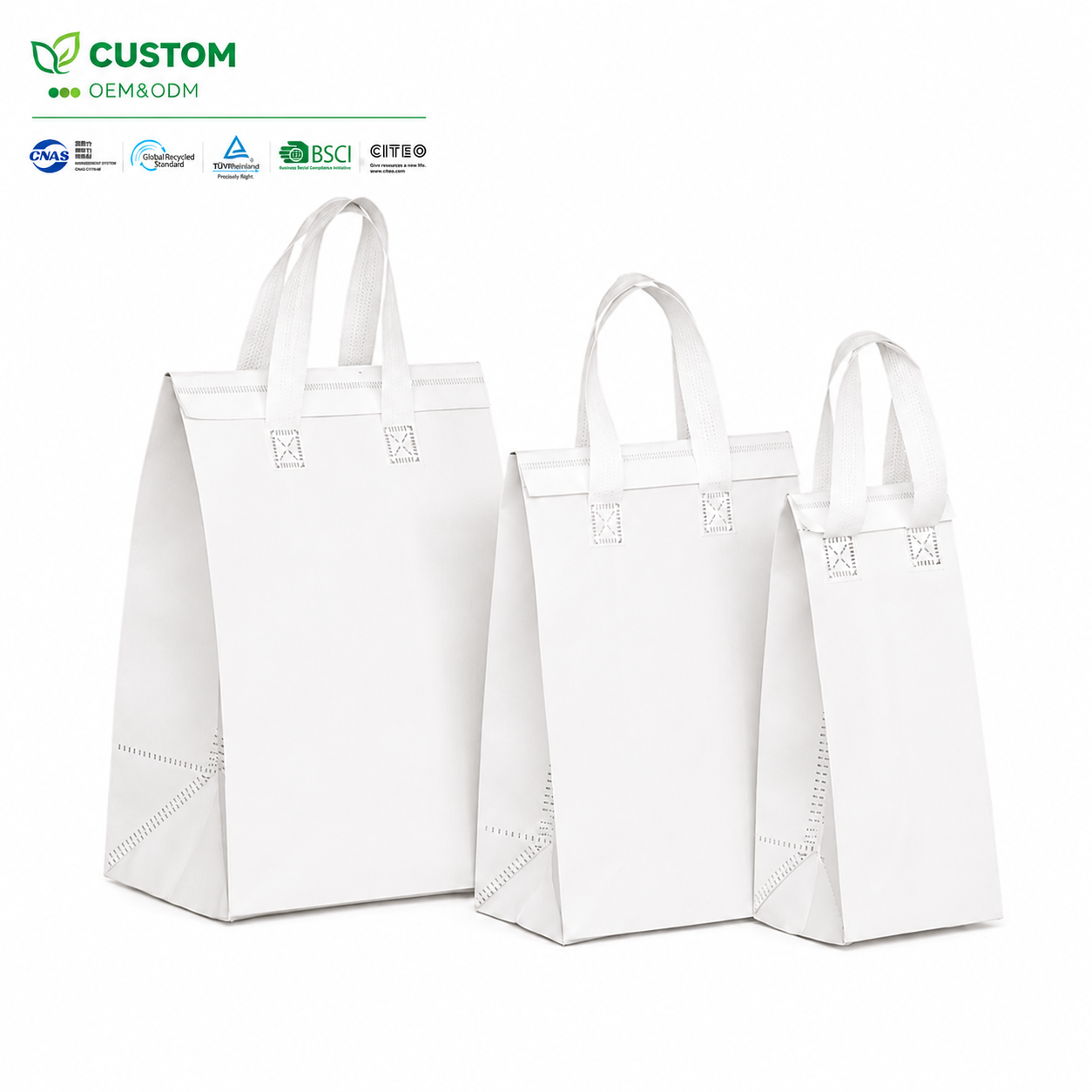
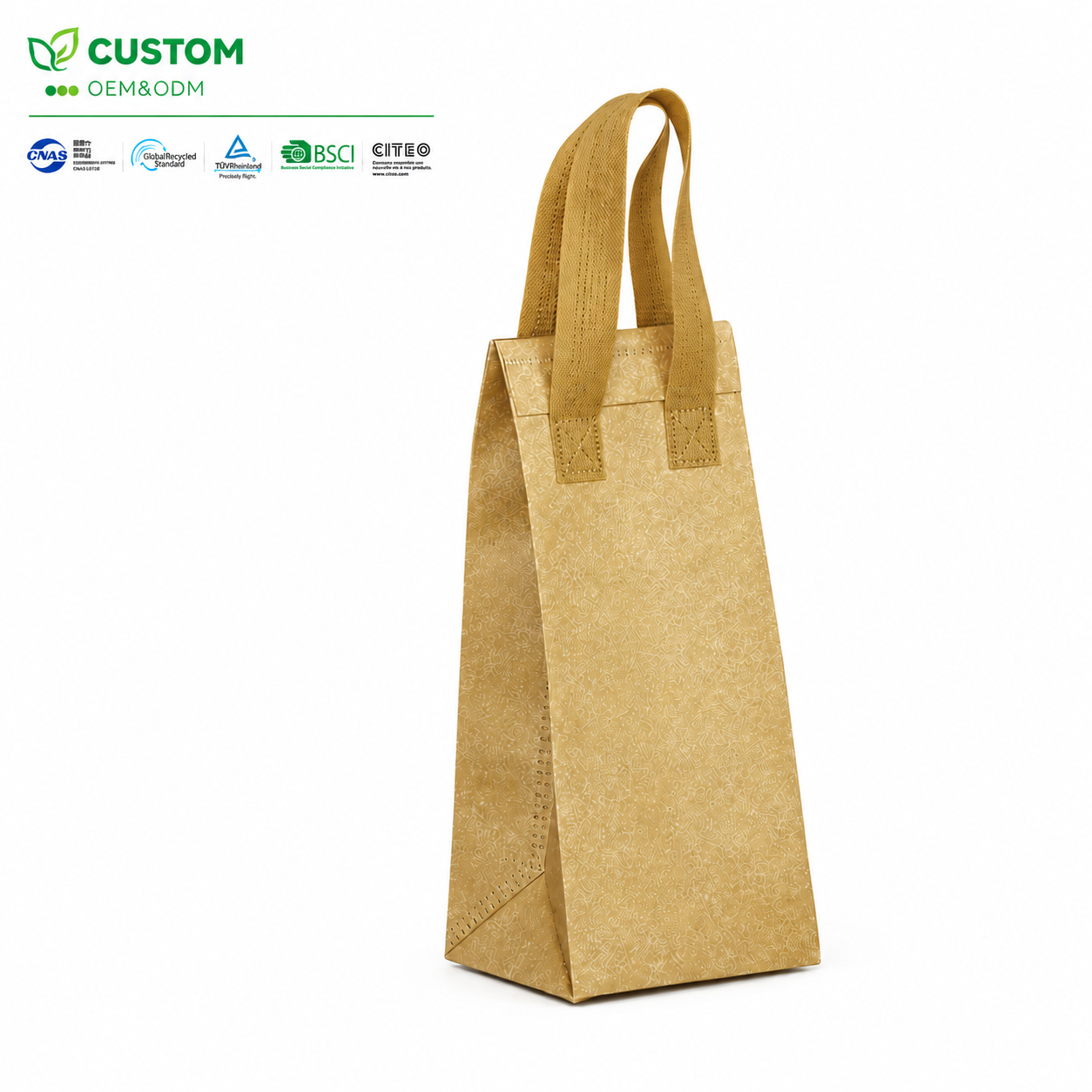
For an individual, the appeal of an eco bag is rarely about carbon accounting. It is about not having a drawer full of flimsy plastic that tears on the way from the car to the kitchen. A non woven bag with a decent gusset stands up on its own, holds a carton of milk without collapsing, and does not need a second bag just to reinforce the bottom. That practical reliability is what turns a reusable bag from a well-intentioned purchase into a habit.
There is also a behavioral effect that shows up in markets with bag charges. Surveys from Singapore in 2024 found that around seventy percent of respondents regularly bring reusable bags, and eighty percent said the charge itself influenced their behavior. The bag did not need to be marketed as a moral object. It needed to be available, durable enough to keep, and easy to remember. Those conditions are easier to meet with a bag that folds flat, cleans up with a wipe, and does not look like a promotional giveaway from a conference.
The table below pulls together reference figures from public life cycle and cost studies. It is not a universal verdict. It shows the variables that separate a reusable bag that pays for itself from one that becomes a drawer ornament.
| Metric | Single-use checkout bag | Non woven reusable bag |
|---|---|---|
| Typical useful life | one trip | dozens of trips under normal handling |
| Breakeven against single-use | not applicable | roughly 7 to 25 uses depending on material and format |
| Primary failure mode | tears at the seam during loading | handle weld or seam fatigue under dynamic load |
| Cost profile | low upfront, continuous replenishment | higher upfront, savings tied to return rate |
| Brand exposure per bag | one checkout moment | repeated impressions across daily errands |
| End-of-life limitation | rarely recycled in curbside streams | recyclability depends on local infrastructure and fabric composition |
The cost-per-use gap is where most procurement decisions get made, and it is also where most spreadsheets go wrong. A reusable bag priced at several times the unit cost of a single-use bag can still be the cheaper option per trip if it survives long enough. The problem is that survival is not guaranteed by the word “reusable” on the label. It is determined by the fabric weight, the handle attachment, and whether the bag is designed for the way people actually carry groceries.
A grocery chain in a hot, humid coastal market rolled out a reusable non woven program and started seeing handle separation after a few months of summer use. The bags had passed a static load test in the lab without complaint. What the lab did not reproduce was a bag sitting in a delivery van through an afternoon, then getting lifted by one handle with several kilograms of groceries inside. The weld zone softened in the heat, peel strength dropped, and the dynamic lift finished the failure. The fix was not a heavier fabric across the entire bag. It was a change in the attachment method on the affected format, plus a narrower storage temperature window in the distribution brief.
That episode is useful because it shows where eco bags actually fail in the real world. The fiber itself is rarely the weak point. The interface between materials is where the variables stack up. A bag that uses a sewn and reinforced handle instead of a simple weld will cost more per unit, and it will also survive the conditions that a lab test misses. The trade-off is real, and pretending otherwise is how a sustainability program ends up with a replacement cycle that quietly erases its environmental case.
The eco bag category is not one material. Polypropylene spunbond is the default because it is mature, prints well, and covers grocery loads without excessive weight. Recycled PET non woven enters the same conversation with a different supply story and a different cost profile, and its recycled content claim is only as credible as the chain of custody behind it. A Global Recycled Standard claim requires documentation that follows the fiber from the bottle stream to the finished bag, not just a hangtag that says “recycled” in green type.
Fabric weight is the other variable that separates a bag that lasts from one that becomes a complaint. In non woven construction, GSM is closer to a load rating than a comfort feature. A bag rated for five kilograms at a hundred GSM will often fail at the handle before the body panel gives out, especially when the handle is ultrasonically welded without reinforcement. The practical answer is not to push every bag to the heaviest fabric available. It is to match the fabric and the attachment method to the load the bag will actually see, then hold those specifications consistent across production runs.
Zhejiang Huaqing Package, known in sourcing circles as Huaqing Package, operates in the non woven and flexible packaging space with a focus on dimensional consistency and material repeatability across production lots. For businesses trying to build a reusable bag program that survives past the first quarter, that kind of manufacturing discipline matters more than a catalog full of nominal eco claims. A bag that behaves the same way on the thousandth trip as it did on the first is the version of “eco” that actually holds up.

Leading eco-friendly packaging bags manufacturer in China. We offer custom non-woven, PP woven, and cooler bags in bulk. OEM/ODM & fast global shipping.
No. 2774-2936 Jianxing East Road, Lingxi Town, Cangnan County, Wenzhou City, Zhejiang Province,China
Copyright © 2026 By Zhejiang Huaqing Package Co.,Ltd Privacy Policy
 EN
 Hot News