There is a simple test for any reusable shopping bag: would a customer pick it up and carry it somewhere that has nothing to do with shopping? To the gym, to a friend's house, to the beach? If the answer is no, the bag is functional but forgettable. If the answer is yes, the design has succeeded.
The design brief for a nonwoven shopping bag that customers love to reuse starts with a mental shift. The bag is not packaging that happens to be reusable. It is a product in its own right, one that competes for space in a closet or car trunk against other bags the customer already owns. It has to earn its place.
Industry surveys of promotional bag buyers in 2026 show a clear move toward restraint. Neutral colors like natural beige, soft gray, black, and muted earth tones are outperforming loud brand colors. Smaller centered or corner logo placement is beating large chest-covering graphics. Clean typography is replacing elaborate multi-color designs.
The logic behind this shift is not aesthetic fashion. It is functional. A bag with a calm, neutral design fits more contexts. It does not clash with a customer's outfit. It does not look like a walking advertisement. It looks like a bag someone chose. And bags that look chosen get used more often.
| Design Factor | Low Reuse Risk | High Reuse Potential | Why It Matters |
|---|---|---|---|
| Color palette | Bright, multicolor | Neutral, tonal | Fits more occasions |
| Logo size | Large, front-center | Small, corner or centered | Feels less like advertising |
| Print style | Full-coverage graphic | Single-color or tonal | Ages better, looks cleaner |
| Material weight | Below 70 GSM | 80–100 GSM | Feels substantial, holds shape |
| Handle type | Thin die-cut | Reinforced sewn or rope | Comfortable under load |
| Structural details | Flat, unstructured | Gusseted bottom, interior pocket | Functional beyond shopping |
The factors in the table are not equally weighted. Handle comfort and material weight tend to influence daily reuse more than visual design, because a bag that hurts the hand or collapses when set down gets left at home regardless of how it looks.
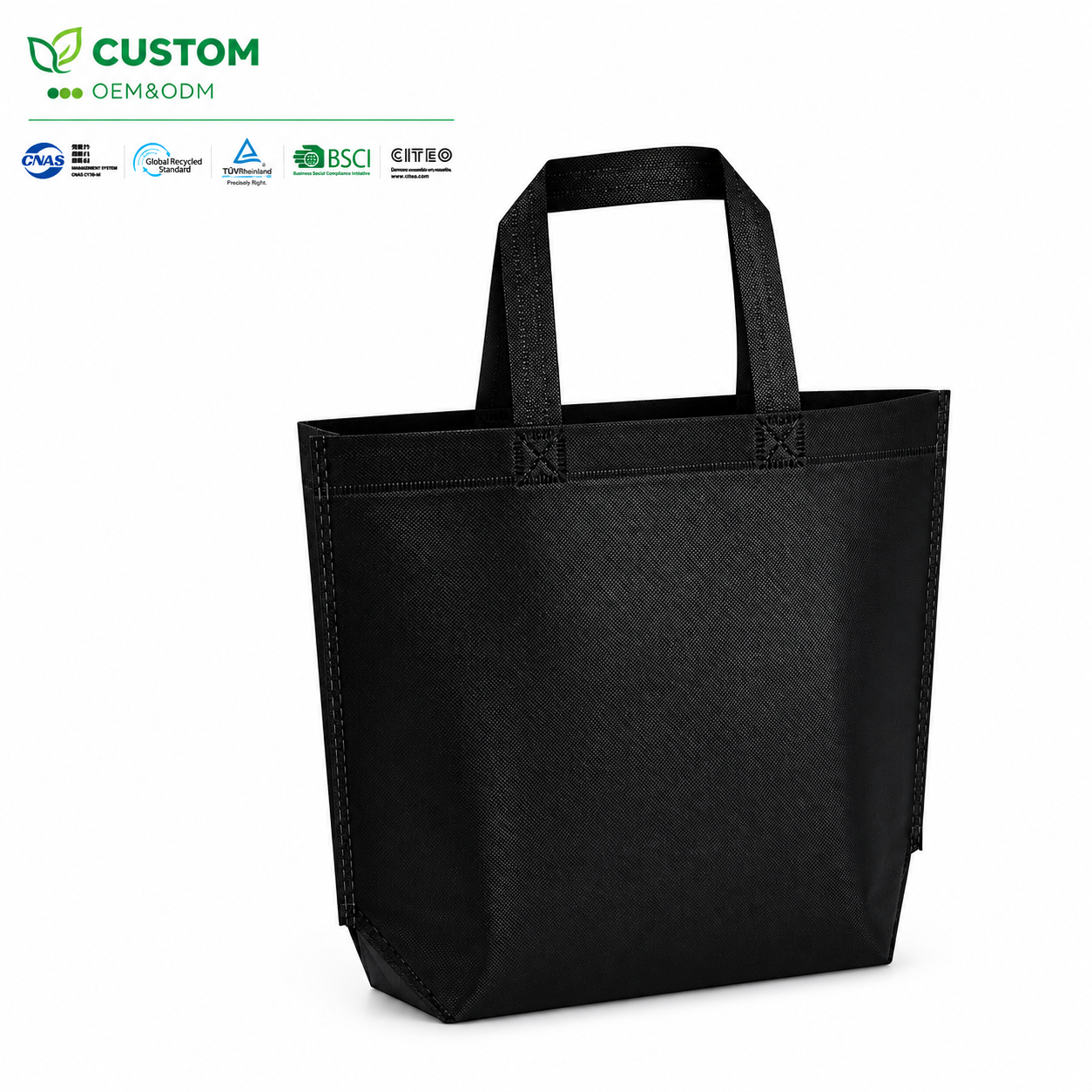
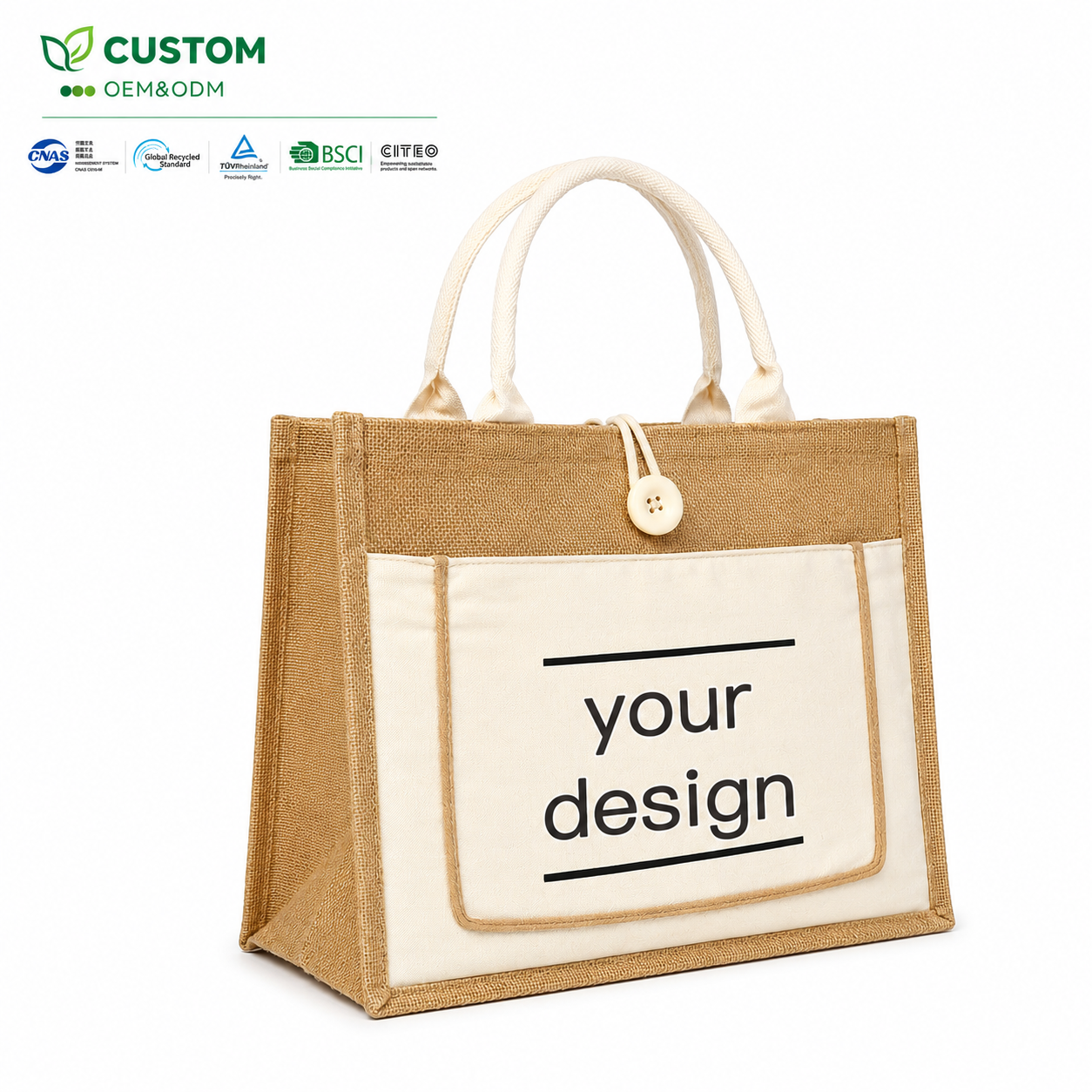
Visual design gets the customer's attention. Structural design determines whether the bag survives past the third use. A nonwoven shopping bag that customers keep and reuse typically has a gusseted bottom so it stands upright when loaded. It has a handle attachment that does not dig into the palm. It may have a small interior pocket for keys or a phone, which turns a shopping bag into an everyday carry item.
The gusset is particularly important for nonwoven bags because the fabric is stiffer than plastic film and does not drape as easily. A flat nonwoven bag with no gusset looks like a sack. Add a gusset, and the bag acquires a three-dimensional form that reads as intentional design rather than an afterthought.
A small accessories brand in the Pacific Northwest ordered a run of 100 GSM nonwoven bags with a natural beige base and a single-color logo placed in the lower right corner. The bag had a gusseted bottom and a sewn cotton handle. Within three months, the brand reported that customers were returning to the store carrying the bag as their everyday tote, not just for shopping but for work and travel. The store had effectively created a branded item that customers chose to use, which extended the brand's presence far beyond the purchase moment.
A beautiful print job on a bag that fades after five washes is not a design success. Nonwoven PP fabric accepts screen printing, heat transfer, and laminated printing. Each method has different durability characteristics.
Screen printing, where ink is pressed through a mesh onto the fabric, tends to hold up well to abrasion and repeated handling. Heat transfer printing can produce finer detail but may crack if the bag is folded repeatedly at the print area. Laminated printing, where a printed film is bonded to the fabric, offers the most vivid colors and the best resistance to fading, but adds cost and slight stiffness to the bag.
For bags intended for heavy daily use, screen printing with a single or two-color design is often the most practical choice. It ages gracefully, and the design remains legible even as the bag softens with use.
Color choices in bag design operate differently than in other product categories. A bag is carried in public, often in close proximity to the customer's clothing. Neutral colors function as a design choice that maximizes reuse because they do not compete with anything. A beige or charcoal nonwoven bag works with a business casual outfit, a weekend casual outfit, and a gym outfit equally well.
Accent colors work best when used sparingly. A single bright stripe, a colored handle, or a small logo in a contrasting tone can add visual interest without dominating the bag's appearance. The most reusable designs tend to have one strong visual element rather than several competing ones.
The temptation in custom bag design is to include everything: the full logo, the tagline, the website URL, the social media handles, and maybe a QR code. The result is a bag that communicates a lot and gets carried nowhere.
A more effective approach is to treat the bag as a brand touchpoint rather than a brand billboard. A small logo, a single color, and one distinctive design detail will generate more impressions over the bag's lifetime because the bag will actually get used. The math is not complicated: a bag with five brand elements that stays in a closet generates zero impressions. A bag with one brand element that goes to the gym three times a week generates hundreds.
For brands ready to move from concept to production, the gap between a design file and a finished bag that matches it is where most projects either succeed or stumble. Huaqing Packaging has been producing printed packaging materials since 1997 and operates two production sites with a combined factory area exceeding 45,000 square meters. The company's experience spans multiple bag formats and printing methods, which means design choices can be matched to the production method that will actually deliver the intended result.
Zhejiang HuaQing Package provides custom non woven bags, canvas bags and different kinds of bags for global brands. ISO900l and GRS-certified, 25+ years'experience, 5000+ clients. Request a quote today!
No. 2774-2936 Jianxing East Road, Lingxi Town, Cangnan County, Wenzhou City, Zhejiang Province,China
Copyright © 2026 By Zhejiang Huaqing Package Co.,Ltd Privacy Policy
 EN
 Hot News